
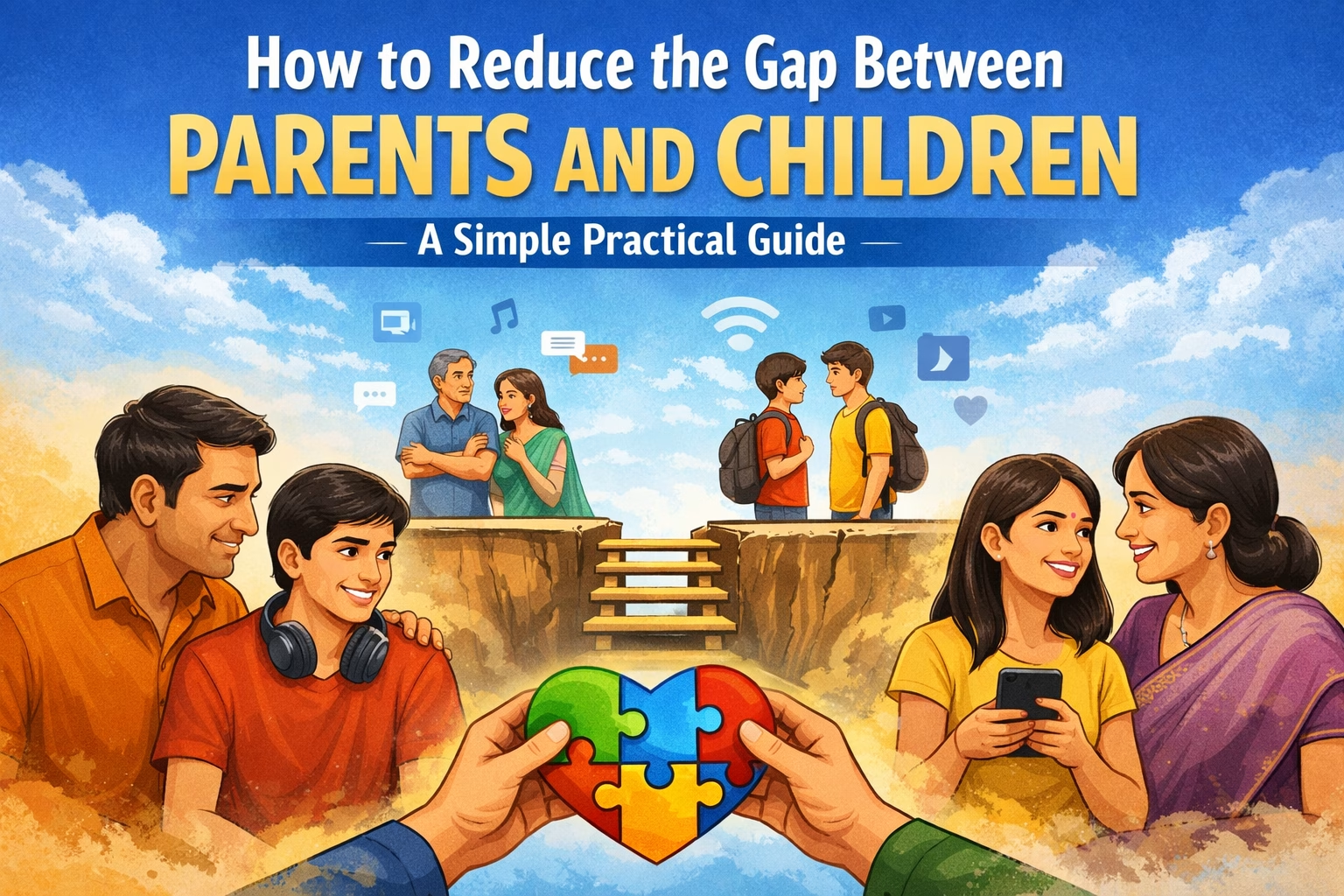
In today’s fast-moving digital world, the gap between parents and children is increasing rapidly. Different generations think differently, communicate differently, and react differently. While parents often feel that children are becoming distant, children feel that parents do not understand them.
If you are searching for a simple and practical guide to reduce the generation gap between parents and children, this article will help you with clear, actionable steps.
What Is the Generation Gap?
The generation gap refers to the difference in thinking, values, communication style, and lifestyle between parents and their children.
Today, this gap is wider because of:
- Social media influence
- Digital lifestyle
- Career pressure
- Changing cultural values
- Exposure to global ideas
Understanding this is the first step toward solving the issue.
Why Is the Gap Increasing in 2026?
1. Technology Dependency
Children spend more time on phones and online platforms, while parents may not fully understand this digital world.
2. Communication Breakdown
Families talk less and scroll more.
3. High Expectations
Parents expect stability and discipline. Children seek passion and freedom.
4. Lack of Emotional Expression
Many families avoid deep emotional conversations.
simple Guide to Reduce the Gap Between Parents and Children
1. Start Listening Without Judging
One of the biggest mistakes parents make is interrupting or correcting immediately.
Children open up only when they feel heard.
Tip: Listen completely before giving advice.
2. Create Daily “No-Phone” Family Time
Set 30 minutes daily where everyone keeps their phones aside and talks.
- Share your day
- Discuss problems
- Laugh together
Consistency builds connection.
3. Understand Their World
Parents should try to understand:
- What apps they use
- What career trends attract them
- What pressures they face
When you show interest, they feel respected.
4. Avoid Comparison
Comparing your child with others damages trust and confidence.
Instead of saying:
“Sharma ji ka beta…”
Say:
“How can I help you improve?”
Encouragement builds bridges.
5. Share Your Own Struggles
Children often think parents had easy lives.
Tell them about your failures and learning experiences.
This builds emotional bonding and mutual respect.
6. Respect Their Opinions
Even if you disagree, allow them to express their views.
Healthy discussions are better than silent distance.
7. Appreciate Small Efforts
Simple words like:
- “I am proud of you.”
- “You handled that well.”
- “Thank you for helping.”
These build emotional security.
8. Balance Discipline with Friendship
Parents should be guides, not dictators.
Children should feel safe sharing mistakes without fear.
Trust creates stronger relationships than strict control.
Role of Children in Reducing the Gap
The responsibility is not only on parents. Children must:
- Respect parents’ experience
- Spend quality time with family
- Avoid rude responses
- Show gratitude
Mutual effort closes the gap faster.
Benefits of Reducing the Parent-Child Gap
When families connect better:
- Stress reduces
- Communication improves
- Confidence increases
- Emotional health becomes stronger
- Family environment becomes peaceful
A strong family builds strong individuals.
Final Thoughts
The generation gap is not a problem — it is a natural difference in experiences.
The real issue is lack of communication.
If both parents and children focus on understanding instead of winning arguments, the gap automatically reduces.
Small daily efforts create lifelong bonds.
- The Biggest Secret of Life: How to Stay Happy

- Never Give Up: Real Stories That Inspire Success
- Value What You Have: A Powerful Gratitude Lesson for Life”
- Communication Skills for Everyone
- How to Build Self-Confidence at Any Age
- What to Do When Tough Times Come: 10 Powerful Mindset Tricks to Stay Strong


