
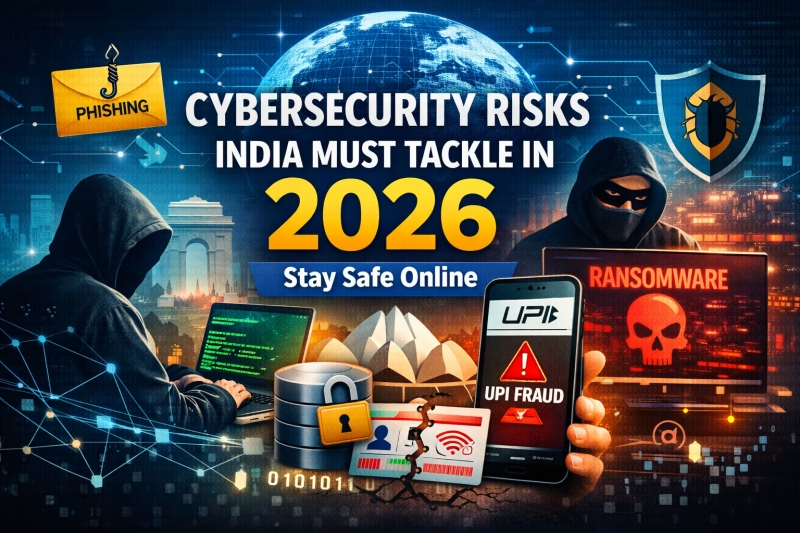
Introduction: Why Cybersecurity Is India’s Biggest Digital Challenge in 2026
India is growing rapidly in digital services—UPI payments, online banking, e-commerce, government portals, and AI-driven systems are now part of everyday life. But with this growth, cybercrime is increasing faster than ever.
In 2026, cybersecurity is no longer only an IT problem. It is a business risk, national security risk, and personal safety issue.
This blog explains the top cybersecurity risks India must tackle in 2026, real examples of threats, and practical steps individuals, businesses, and organizations can take.
1) Rise of AI-Powered Cyber Attacks in India
In 2026, attackers are using Artificial Intelligence to make cybercrime faster, smarter, and more dangerous.
Major AI-based cyber threats:
- AI-generated phishing emails that look 100% real
- Deepfake voice calls pretending to be bank officials or family members
- Automated hacking tools that scan websites and apps quickly
Why it’s dangerous:
Earlier, scams were easy to identify due to spelling mistakes. Now, AI makes scams perfectly written and believable.
2) UPI & Digital Payment Fraud Becoming More Advanced
India is the global leader in UPI usage, and that’s why cybercriminals focus heavily on it.
Common UPI fraud methods:
- Fake “UPI Collect Request” tricks
- QR code scams (scanning leads to payment instead of receiving money)
- Fake customer care numbers on Google search
- Screen-sharing apps used to steal OTP and banking access
Biggest risk:
Most UPI scams happen due to social engineering, not hacking.
3) Mobile Malware and Fake Apps Targeting Indian Users
In 2026, smartphones are the primary target for cybercriminals.
Popular attacks include:
- Fake loan apps
- Fake trading apps
- Fake government scheme apps
- APK files shared through WhatsApp or Telegram
Once installed, these apps can:
- Read SMS (OTP theft)
- Access contacts
- Steal banking login
- Record your screen
4) Cyber Attacks on Small Businesses & Startups
Earlier, hackers mainly attacked large companies. In 2026, the biggest target is small businesses.
Why?
- Small businesses have weaker security
- No cybersecurity team
- Cheap hosting and weak passwords
- Lack of backups
Common attacks:
- Website hacking
- Data theft
- Email hacking
- Ransomware
5) Ransomware Threats in India Are Increasing
Ransomware is a cyberattack where hackers lock your files and demand money to unlock them.
Who is at risk?
- Hospitals
- Schools
- MSMEs
- Real estate companies
- Logistics companies
- Vehicle inspection and valuation firms
Why ransomware is dangerous:
Even if you pay, there is no guarantee you’ll get your data back.
6) Data Breaches and Leakage of Personal Information
Data is the new currency in 2026.
India has millions of users on:
- Aadhaar-linked services
- Mobile networks
- Banking and fintech apps
- Government portals
- E-commerce sites
What can leak?
- Mobile numbers
- Email IDs
- Aadhaar-linked details
- Addresses
- KYC documents
This leaked data is then used for:
- Identity theft
- Fake loan applications
- SIM swap fraud
- Account takeover
7) SIM Swap and OTP Hijacking Attacks
This is one of the most dangerous scams in India.
How it works:
- Criminal collects your details (from data leaks or social engineering)
- Gets a duplicate SIM from telecom store
- Your SIM stops working
- Criminal receives OTPs and resets banking passwords
Result:
Your bank account, UPI, email, and even social media can be hacked.
8) Cybersecurity Threats in Government and Public Infrastructure
India’s digital infrastructure is expanding rapidly:
- Smart cities
- Digital governance portals
- Railways and metro systems
- Power grids
- Traffic systems
In 2026, cyberattacks on these systems are a serious risk.
Major threats:
- DDoS attacks (websites crash)
- Database hacking
- Nation-state cyber threats
- Fake news and misinformation campaigns
9) Social Media Scams & Identity Fraud
Cybercriminals are using Instagram, Facebook, WhatsApp, and Telegram for scams.
Trending scams in India:
- Fake investment schemes
- Fake job offers
- Fake government scheme messages
- Fake celebrity giveaways
- Fake “courier parcel” scams
Biggest danger:
People trust social media messages more than emails.
10) Weak Passwords and Poor Cyber Hygiene
Even in 2026, one of the biggest reasons for hacking is still:
Weak passwords + same password everywhere
Examples:
- 123456
- password@123
- mobile number
- date of birth
This makes it easy for attackers to:
- Guess passwords
- Use leaked passwords from other sites
- Hack Gmail, Facebook, bank, and business accounts
How India Can Tackle Cybersecurity Risks in 2026
For Individuals: 10 Safety Rules
- Never share OTP with anyone
- Never install unknown APK files
- Don’t click unknown links in WhatsApp
- Turn ON 2-Factor Authentication
- Use strong passwords and password managers
- Avoid screen-sharing apps with strangers
- Always verify customer care numbers
- Keep phone OS and apps updated
- Enable SIM PIN and email security
- Use official apps only from Play Store/App Store
For Businesses: Cybersecurity Checklist (2026)
Businesses must treat cybersecurity as an essential investment.
Minimum must-have steps:
- SSL on website (HTTPS)
- Daily backups (cloud + offline)
- Employee training on phishing
- Strong email security (2FA + access controls)
- Secure hosting and firewall
- Antivirus and endpoint security
- Data encryption for customer information
- Cyber insurance (recommended)
The Future: Cybersecurity Will Become a Daily Habit
In 2026, cybersecurity is not optional.
It is as important as:
- locking your house
- keeping your wallet safe
- protecting your family
The more digital India becomes, the more cyber threats will rise. Awareness, safe habits, and secure systems are the only way forward.
Conclusion
Cybersecurity risks in India in 2026 are evolving rapidly due to:
- AI-based attacks
- UPI fraud
- mobile malware
- ransomware
- data leaks
- identity theft
But the good news is:
most cybercrimes can be prevented with awareness and basic safety measures.
FAQs (SEO Section)
Q1. What is the biggest cybersecurity risk in India in 2026?
UPI fraud, phishing scams, mobile malware, and ransomware are among the biggest threats.
Q2. How can I protect my UPI account?
Never approve collect requests, never share OTP, and never scan unknown QR codes.
Q3. Why are small businesses targeted?
Because they usually have weak security, no backups, and limited IT resources.
Q4. Is ransomware common in India?
Yes, ransomware attacks are rising in India, especially on hospitals, MSMEs, and service businesses.
Q5. What is the best way to stay safe online?
Strong passwords, 2FA, awareness, and avoiding unknown links/apps.
- The Biggest Secret of Life: How to Stay Happy

- Never Give Up: Real Stories That Inspire Success
- Value What You Have: A Powerful Gratitude Lesson for Life”
- Communication Skills for Everyone
- How to Build Self-Confidence at Any Age
- What to Do When Tough Times Come: 10 Powerful Mindset Tricks to Stay Strong


