
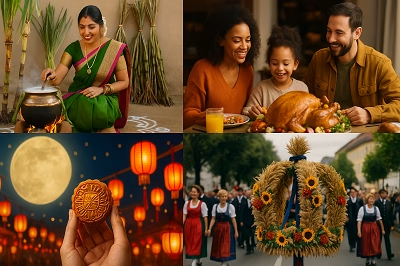
Traditional Harvest festivals are a beautiful way to say thank you to nature for providing food and prosperity. These festivals are celebrated in different parts of the world, each with its own customs, music, food, and joy. Whether it’s dancing in the fields or lighting lanterns, harvest festivals remind us to be grateful and stay connected to the earth.
1. Pongal – India
When: January
Why it’s celebrated: Pongal is a four-day harvest festival celebrated in Tamil Nadu, India. Farmers thank the Sun God and cattle for a successful harvest.
Key traditions:
- Boiling the first rice of the season called "Pongal"
- Decorating cows and bulls
- Drawing kolam (rangoli) outside homes
- Community meals and prayers
2. Thanksgiving – United States & Canada
When: November (USA), October (Canada)
Why it’s celebrated: A day to give thanks for the harvest and blessings of the past year.
Key traditions:
- Family gatherings
- Turkey dinner with sides like mashed potatoes and pumpkin pie
- Parades and football games
- Expressing gratitude
3. Mid-Autumn Festival – China & Vietnam
When: September or October (based on the lunar calendar)
Why it’s celebrated: To give thanks for the harvest and to celebrate the full moon, a symbol of peace and reunion.
Key traditions:
- Eating mooncakes
- Lighting lanterns
- Moon gazing with family
- Lion and dragon dances
4. Chuseok – South Korea
When: September (based on the lunar calendar)
Why it’s celebrated: A major harvest festival to honor ancestors and enjoy the fruits of the season.
Key traditions:
- Visiting ancestral hometowns
- Preparing and eating songpyeon (rice cakes)
- Wearing traditional hanbok
- Folk games and dances
5. Yam Festival – Nigeria & Ghana
When: August or September
Why it’s celebrated: To mark the first harvest of yams, the most important food crop.
Key traditions:
- Offering the first yam to gods and ancestors
- Music, dancing, and drumming
- Traditional clothing and food sharing
- Parades and community events
6. Sukkot – Jewish Communities Worldwide
When: September or October
Why it’s celebrated: To remember the time Israelites lived in temporary shelters in the desert and to thank God for the harvest.
Key traditions:
- Building a sukkah (temporary hut)
- Eating meals inside the sukkah
- Waving the lulav and etrog
- Prayers and family meals
7. Loi Krathong – Thailand
When: November (full moon night)
Why it is celebrated: While not a traditional harvest festival, it's a water festival that thanks the river goddess for providing water for rice farming.
Key traditions:
- Floating small decorated baskets (krathongs) on water
- Lighting candles and lanterns
- Fireworks and music
- Cultural performances
8. Erntedankfest – Germany
When: September or October
Why : Christian pepoles harvest festival.
Key traditions:
- Church services with decorated harvest crowns
- Parades and music
- Sharing food with the community
- Farmers' markets and fairs
Conclusion
Across the globe, traditional harvest festivals bring people together to celebrate life, nature, and hard work. Though customs may vary, the message is the same – gratitude. These festivals keep cultures alive, strengthen community bonds, and remind us to respect the land that feeds us.
Our Latest Posts
- The Biggest Secret of Life: How to Stay Happy

- Never Give Up: Real Stories That Inspire Success
- Value What You Have: A Powerful Gratitude Lesson for Life”
- Communication Skills for Everyone
- How to Build Self-Confidence at Any Age
- What to Do When Tough Times Come: 10 Powerful Mindset Tricks to Stay Strong


